Showing posts with label ACE. Show all posts

Thursday, September 10, 2015

Back Breaker or ACE Maker?

Ever since the ACE program began back in 2004, the stack of recommended study books has been a weighty pile – over 25 pounds of facts, insect knowledge, and general pest control knowledge. Don’t get me wrong … they’re all valuable books for a well-educated PMP to have on his or her shelf. But the page count was well over 3,000 pages in total. Regardless of how many great insect images they include, that’s a TON of reading for anyone – especially a PMP with a hectic daily schedule.

As ACE evolved to become the industry standard for professional achievement in pest management, it became apparent that a more efficient solution was needed for the growing number of individuals working to attain an ACE certification. Few if any of these professionals could possibly read all of the study materials in a comprehensive way. As one applicant told me at Purdue a couple of years ago, “Holy smokes! Just getting through Mallis would take me a year. My ACE application would be expired by the time I get through all these books.”

It was time for something new.

Two years in the making, we are pleased to announce that the new study guide for the ACE exam is on sale now. It was sent to the printer late last week and the first copies should arrive in our offices by early October, just in time for PestWorld. Published by the Entomological Society of America, this 208-page soft cover book is the first professional title written specifically for the ACE applicant and, when coupled with the NPMA Field Guide and diligent studying, should prove to be an excellent way to prepare for the ACE exam. It is also an excellent reference book for introducing anyone to the concepts of IPM in general.

Contents:
The book is written by Dr. Mike Merchant, BCE (TAMU), and Richard Levine, ESA’s Communications Manager and a member of the National Association of Science Writers. This tag-team approach ensures that the book’s science and information is spot-on, but also that its tone remains easily-digestible by an audience of PMPs who may not have the same level of scientific training as a degreed entomologist.

The end result is a science book that reads more like a very, very in-depth article in a pest control magazine. As industry expert Dr. Austin Frishman (BCE-Emeritus) wrote in his Foreword to the book, “This is really good! Whether one is eligible for the ACE program or not, a thorough review of this guide will serve everyone who works in urban pest management. This is a must-read for anyone in this industry, whether they are going for their ACE or not … it really condenses down what we as pest management professionals should know.” (read his full foreword here).

The full Introduction to the book is included in the text box to the right. The Table of Contents for the rest of the book is:

  • Chapter 1: The Associate Certified Entomologist (ACE) Program
  • Chapter 2: What Is IPM?
  • Chapter 3: Inspection Is the Backbone of IPM
  • Chapter 4: Monitoring and Action Thresholds
  • Chapter 5: Selecting Control Methods
  • Chapter 6: Insecticides
  • Chapter 7: Pesticide Safety
  • Chapter 8: Insect Classification
  • Chapter 9: Insect Morphology, Biology, and Behavior
  • Chapter 10: Major Structural Pest Groups
    • Ants
    • Cockroaches
    • Wood-Destroying Insects
    • Stored-Product and Fabric Pests
    • Flies
    • Biting and Stinging Pests
    • Occasional Invaders and General Household Pests
    • Common Vertebrate Pests
  • Chapter 11: Problems Beyond the Realm of the PMP: Mystery Bites, Medical Issues, and Delusional Infestations
  • Chapter 12: Introduction to ACE Exam Preparation
  • Glossary of Terms
  • Suggestions for Further Reading


Special introductory pricing: The book will be offered to all customers at a special introductory price for a limited time only. The prices, which will likely rise after December 31, 2015, are:

  • ACE applicants: $45 (discount codes were emailed to all ACE applicants)
  • ACEs and ESA members: $69
  • Non-members: $85 

Shipping and handling will be a bit extra, of course, but you can avoid this fee by buying your book at the ESA booth at PestWorld 2015 in Nashville, TN, Oct. 20-23, or at the ESA Annual Meeting in Minneapolis, Nov. 15-18. The book’s publication makes it a great time to become an ACE, and all current and new ACE applicants save about 50% off of the cover price. Books are expected in-house by mid-October and should be delivered for all pre-orders by late October.

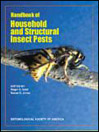
And as if that weren’t enough, for a limited time and while supplies last, all orders will also include a FREE copy of one of ESA’s most popular titles, the Handbook of Household and Structural Insect Pests - a still-crucial resource for ACEs worth $59!

 So if you’re interested in earning your ACE or know someone who is, or if you’re simply interested in maintaining and adding to your knowledge of professional pest management, this is the resource for you!

CLICK HERE TO BUY YOUR COPY OF THE ACE STUDY GUIDE AT DISCOUNTED 2015 RATES AND TO RECEIVE YOUR FREE COPY OF THE HOUSEHOLD PESTS HANDBOOK

Monday, August 10, 2015

And then there were two ...

Peter Brigden, ACE-I
ESA would like to congratulate Peter Brigden of Rapid Solutions in Queensland, Australia on being the second person in the world to earn the Associate Certified Entomologist-International (ACE-I) designation.

Having been launched at PestWorld in 2014, the ACE-I is a new and international version of the ACE program. The first ACE-I, Kenneth Leung (Hong Kong), passed his exams in February of 2015 and --though others have attempted it-- Peter is only the second person in the world to pass both of the ACE-I exams. The ACE-I program differs from the ACE program in several key respects, including the fact that applicants are required to take and pass two exams (One on Core entomology and pest management/IPM skills; and another on pesticide knowledge and safety) instead of just one for the US version of the ACE program.

"Getting ACE-certified serves as confirmation that as a professional trainer in the Australian Pest Management Industry, that I ‘know my stuff’," Brigden recently told the ESA staff. It also served as a personal challenge to get a qualification of international standing for the industry and --if it challenges others, like it seems to in the USA-- then that is a good thing because we need to stretch ourselves mentally from time to time. ACE also served as a professional marker because as a trainer I need to continually develop my professional standards in both training (teaching) and industry knowledge (pest management) and for the latter, ACE-I does that in a most unequivocal manner."

Hear Peter speak on August at the 2015 Rapid Risk Management Conference, August 14-15, on the Gold Coast in Queensland, Australia.

Thursday, July 16, 2015

Updated ACE Code of Ethics (Guest Post)

By 2015 ESA Certification Board Director Dr. Laura Higgins, BCE

By unanimous vote yesterday, the Certification Board updated the ACE Code of Ethics which is binding on all ACEs and ACE aspirants. The Code of Ethics is seen as a living document and may change over time, though the intent will always be to ensure that ACEs and those who wish to become ACEs continue to be of the highest ethical caliber and represent the best in our industry.

For the most part, the recent changes to the Code of Ethics were cosmetic and merely served to simplify and clarify the language. For example, in the previous version of the Code, every time the ACE was referred to, it was listed as "Associate Certified Entomologist-Pest Control," a cumbersome structure to be sure. In the new version, that has been simplified to "ACE" in 25 different instances.

The most substantive changes came to Sections 3.4, which was a relatively new addition to the Code, having been added only in November 2013, as discussed here. Whereas the previous version of this Section only dealt with the ways that an ACE refers to themselves, this latest update adds a burden on the ACE to report back to ESA any misuse of the terms entomologist or certified entomologist.

It is the belief of the ESA Certification Board that only by obtaining a degree in entomology (whether a Bachelors, Masters, or Doctorate) can one become an entomologist. The ACE is the only legitimate path currently in existence for an individual to become an Associate Certified Entomologist.

Any pest management professional who claims to be a "Certified Entomologist" but (a) does not have a degree in the science, or (b) is not certified as an ACE or a BCE is not recognized as a certified entomologist in the eyes of the ESA Certification Board.

This is not a change from past practices, actions, nor beliefs of the Certification Board, it is merely a codification of long-standing policy of the Board.

To review the current ACE Code of Ethics, please click here.

The specific changes to the Code are detailed below with additions indicated in blue and deletions noted by strike-through:

Preamble: The profession of entomology is increasingly important to the welfare and progress of human society. Associate Certified Entomologists-Pest Control (ACE)s have the position and authority to render effective service to humanity, in keeping with high standards of ethical conduct. In order that the honor and dignity of the profession be advanced and maintained, the Entomological Society of America (ESA) has established the following code to define the professional conduct and ethics, binding on Associate Certified Entomologists-Pest ControlACEs.
1.1: The Associate Certified Entomologist-Pest Control'sACE’s knowledge and skills will be used for the betterment of human welfare.
1.2: The Associate Certified Entomologist-Pest ControlACE will share in sustaining the laws, institutions, and burdens of the community.
2.1: The Associate Certified Entomologist-Pest ControlACE will have proper regard for the safety, health, and welfare of the public in the performance of all of his or her professional duties – ensuring proper regard for the safety, health, and welfare of the public and environment; documenting findings as appropriate and required; and keeping all stakeholders informed of the process.
2.2: The Associate Certified Entomologist-Pest ControlACE will be honest and impartial, and will preface any one-sided statements, criticisms, or arguments by clearly indicating on whose behalf they are made.
2.3: The Associate Certified Entomologist-Pest ControlACE will express an opinion on an entomological subject only when it is founded on adequate knowledge and honest conviction,; and will be factual in all estimates, reports, and testimoniesy.
3.1: The Associate Certified Entomologist-Pest ControlACE will strive to advance the science and art of entomology, to guard and uphold its high standard of honor, and to conform with to the principles of professional conduct.
3.2: The Associate Certified Entomologist-Pest ControlACE will cooperate in edifying the profession by exchanging information with fellow entomologists, and by contributing to the work of technical societies and the technical press, where disclosure of such information does not conflict with the interests of clients and employers.
3.3: The ACE will strive to promote the public’s awareness and perception of pest management, pest management professionals, and all facets of the pest management business, taking special care of his/her responsibilities as an ACE to defend the honor and prestige of the entomological aspects of the pest management profession that are encapsulated by the ACE program.The Associate Certified Entomologist-Pest Control will defend the prestige of the entomology and pest control professions and will report to the Entomological Society of America any persons or organizations using the words entomologist, entomology, or derivatives thereof in a manner implying performance or supervision by a Board Certified Entomologist, or by an Associate Certified Entomologist, when such is not true.
3.4: The ACE, when referring to the certification granted by the ESA, shall always use the full title of Associate Certified Entomologist or ACE, rather than abbreviating to Certified Entomologist or only Entomologist. The ACE will seek to inform others of the prestige of entomology and will immediately report to the ESA any misuse or misrepresentation of the terms entomology, entomologist, Associate Certified Entomologist, Board Certified Entomologist, or derivatives thereof. The Associate Certified Entomologist – Pest Control, when referring to the certification granted by the Entomological Society of America, shall always use the full title of Associate Certified Entomologist or ACE, rather than abbreviating to certified entomologist or only entomologist.
4.1: The Associate Certified Entomologist-Pest ControlACE will act as a faithful agent or trustee for each employer or client, and will not knowingly engage in illegal work or unethical practice, or knowingly cooperate with any person so engaged.
4.2: The Associate Certified Entomologist-Pest ControlACE will undertake only those entomological assignments for which he or she is qualified. The Associate Certified Entomologist-Pest ControlACE will obtain, or advise the employer or client to obtain, the assistance of specialists whenever the employer's or client's interests are so served best, and will cooperate with such specialists.
4.3: The Associate Certified Entomologist-Pest ControlACE will indicate to the employer or client alternatives to recommended courses of action and the expected consequences of each recommended action and alternative.
4.4: The Associate Certified Entomologist-Pest ControlACE will inform the employer or client of any financial interest, or other conflicting interest, he or she has in any person, material, device, or concept which is or might become involved in a project or work for the employer or client. Decisions regarding entomological or business services to be performed shall not be influenced by such interests.
4.5: The Associate Certified Entomologist-Pest ControlACE will act fairly and justly toward vendors and contractors, selecting their products and services on the basis of merit and value.
4.6: The Associate Certified Entomologist-Pest ControlACE will not disclose information concerning the business affairs or technical processes of present or former employers or clients without their consent.
4.7: The Associate Certified Entomologist-Pest ControlACE will not accept compensation, financial or otherwise, from more than one party for the same service, or for other services pertaining to the same work, without the consent of all interested parties.
5.1: The Associate Certified Entomologist-Pest ControlACE will give credit for pest management and entomological work or advice to whom it is due.
5.2: The Associate Certified Entomologist-Pest ControlACE will promote solidarity and harmony with fellow pest management professionals, respect their judgment, and support them collectively and individually whenever possible against unjust claims and accusations.
5.3: The Associate Certified Entomologist-Pest ControlACE will not accept any engagement to review the professional work of a fellow pest management professional (except in litigation and editing of technical or scientific papers) without the knowledge of such person, unless the person’s connection with the work has been terminated.
5.4: The Associate Certified Entomologist-Pest ControlACE will not injure intentionally the professional reputation, prospects, or practice of another pest management professional. However, proof that another ACECertified Entomologist has done anything unethical, illegal, or unfair in a professional capacity, should be communicated to the Entomological Society of AmericaESA as soon as possible.
5.5: The Associate Certified Entomologist-Pest ControlACE will provide a prospective pest management employee with complete information on working conditions and the proposed status of employment and during employment will keep the employee informed of any changes therein.
5.6: The Associate Certified Entomologist-Pest ControlACE who employs or supervises other pest management professionals will endeavor to encourage and provide opportunities for their professional development and advancement.

Friday, May 9, 2014

ACE fees explained

We've had some questions come in to ESA about how the new fees for ACE work (see Questions #7 and 8 on this post). Here is my attempt to explain the process as succinctly as possible.

The old system (which went away on January 1, 2014) required an application fee and then --upon passing their exam-- most people had to renew their ACE again right away. The new structure flips that on its head and now most people will remain ACE certified and not need to worry about renewing their certification for several years after they pass the exam.  Overall the fees remain about the same for most people, so this change is not a fee increase -- it is a restructuring.

ACE application and renewal date rules:
  1. All applicants must take their exam within 1 year of the application's acceptance
  2. If unsuccessful, the applicant must wait at least 3 months but not more than 1 year from their earlier attempt
  3. All applicants must ultimately pass the ACE exam within 3 years of application acceptance or the application will expire
    1. If the application is accepted in the first half of the year it will expire on December 31st, two years hence
    2. If the application is accepted in the second half of the year it will expire on December 31st, three years hence
  4. Once an applicant passes the exam they are ACE certified until the end of the initial 3-year term.
  5. When it is time to renew the ACE certification, the renewal term is for 3 calendar years.
Everything that ESA does is based on the calendar year, however, which complicates this model a little bit. Applications accepted in Jan-June will be a little less than 3 years and applications accepted July-December will be a little longer than 3-years in terms of their ACE certification when they pass. Here are some examples of how this plays out:

(a) Example #1 - John's application is accepted on 2/1/2014 and he tests and passes his ACE on 9/1/2014. His application lifespan is from 2/1/2014 and he will remain ACE certified until the end of the 3-year term (12/31/2016) which is a few months short of the 3-year period.

(b) Example #2 - Jane's application is accepted on 8/1/2014 and she tests/passes later that month. Her application lifespan is from 8/1/2014 and she will remain ACE certified until 12/31/2017 (since she applied in the second half of the year). Her application lifespan is thus a little longer than 3 years.


Monday, May 5, 2014

Volunteerism

Membership associations like ESA are generally run by a professional staff (people like me). Every day we come to the office and perform that tasks that help to keep the association running smoothly. And we could not do our job without the support of volunteers.

There are many, many volunteer positions that support ESA and the ESACC certification programs of BCE and ACE. Last week I sent out an email asking for volunteers to fill a few slots on two judging panels (a judging panel is the body that reviews candidates for an award and ultimately decides who is the winning candidate). We had a handful of open slots on the two panels and I thought it would be difficult to fill those slots. 

Boy, was I wrong.

Within the first few minutes of sending the email my inbox began to flood with qualified ACEs and BCEs who were looking for a way to serve their certification programs. Within the first 24 hours I had over 100 talented professionals who had volunteered to serve on the ACE Professional Award Judging Panel or the BCE Certification Awards Judging Panel. Since that time I've had several dozen more people email me and ask if there were still slots open.

ACE Professional Award Judging Panel (current as of 5/5/2014)
The panels have now been filled and we have a host of people waiting in the wings for the next volunteer slot to open up. To those of you who volunteered (whether you were selected for the panel or not) -- thank you. Everyone is busy these days. Work, family, school, church, community -- very few people have extra hours in the day and most of us have our precious time pulled in dozens of ways. The fact that you are willing to step forward and offer your time speaks well of each of you and, in a broader sense, the size of the response to this call for volunteers speaks well of the profession.  

BCE Awards Judging Panel (current as of 5/5/2014)
Entomology and pest management are helping professions. From conversations I've had with many of you over the years, I know that a lot of PMPs and entomologists got into this business out of a desire to help others. Volunteering to serve on a panel or a committee is an extension of that "helping mentality".

If you volunteered and were not selected to serve at this time, take heart. We have updated your record in our database that you have an interest in serving the certification programs. The next time we have an opening for something, we'll go to that list first before doing a broad-call to everyone else.

Some other possibilities of service include:

  • Serve on a different judging panel. The contact is Cindy Myers here at ESA HQ. Here is a list of all the awards that ESA, the Entomological Foundation, and the ESA Certification Corporation offer. Each has a judging panel and Cindy could let you know of any openings. Side note:  All other judging panels are only for ESA members.
  • Helping to build study materials for the ACE exam
  • Helping to develop standards and review the BCE exams (we'll need people to work on each of the six BCE Specialties and the General Qualifying Core BCE Exam).
  • Volunteering to sit on an ACE subcommittee, such as the exploratory committees to start ACE certifications in Public Health, Lawn and Ornamental, and perhaps other specialties.
  • Volunteering to sit on one of the other Certification committees, such as the Audit committee, Education committee, or others.
  • Serving as a volunteer proctor for a BCE or ACE applicant
  • Consider running for a seat on the Certification Board during the next election. We are in the process of modifying the ESACC Bylaws to allow for an open seat for an ACE to serve as well. 

Friday, March 21, 2014

Retesting for the ACE

So you took the ACE exam and did not pass. What do you do now?

First, [work with me here] take a deep breath. Now hold it .... and ...exhale. And again ...

That's right. Take a deep breath, regroup, and then get out your books.  If you took the exam and did not pass, you're in good company -- about 25% of current ACEs did not pass on their first attempt. The ACE exam is hard by design. It is intended to be a "tough but fair" indication of the level of knowledge that one should have in their heads to be credentialed as an Associate Certified Entomologist.

When you first hit submit on the exam the computer will flash your unofficial score on the screen and you'll get this same data as an email. Within a week or so your exam will be reviewed by the test administrators and you'll get an official review that will include your score, your next steps, and a report that offers suggestions for studying. An example of this report is shown below.

Deciphering the ACE Coaching Report:
Recall that the exam is broken into four key "knowledge domains". The full exam comes from these domains -- each section has a percentage of the exam that is covered:

  • (I and I) Inspection and Identification (45%)
  • (S and I) Selection and Implementation of Control Methods (28%)
  • (E) Evaluation (15%)
  • (M) Monitoring (12%)
A previous post covered this in more detail and analyzed the first (and largest) section of the exam, but it is important to note that each domain contains a number of "skills" that a PMP would need to be able to demonstrate mastery of if they are going to be able to pass that section of the exam. The domains and skills are all listed on the ACE Exam Content Outline that is on the ACE certification website. 

Each of these skills has a number of questions on the exam that are assigned to it. And each of the questions has been defined as Easier, Medium, or Harder (This "level of difficulty" assessment is reviewed and updated quarterly). This is the recipe that builds the exam. We program the exam software to pull xx number of questions from each domain/skill/difficulty. We call that a question category.

Your ACE Coaching Report covers your version of the exam in this same level of detail. Every question fits into a Domain/Skill/Difficulty (question category) classification and your report tells you how you did on each of these. On the graphic above, the text covered in the green circle indicates the version of the test that you took. The blue arrow highlights the domain, the red arrow indicates the skill covered, and the orange arrow indicates the difficulty. 

Beneath that you'll see a comparison table that shows your percentage on all questions in that category compared to everyone else who took the exam. Bear in mind that some of the question categories are smaller than others and there may only be 1-2 questions on the exam from that category. If you got that question right you got a 100%. If you got it wrong, you may see a 0%.  For the larger categories you would more likely see more disparity in the numbers. 

So ... this is informative ... but how do I USE the report?
We would suggest the following approach when an applicant does not pass the exam.  
  1. Review the Coaching Report and ensure that you understand the structure.
  2. Look for areas where you did not do as well. Again, bear in mind that some of these areas are of lower focus, so there may only be one-two questions on the exam that come from that section. The percentage of each Domain that builds the exam are:
    1. I and I -- 45%
    2. S and I -- 28%
    3. E -- 15%
    4. M -- 12%
  3. For those areas where the score was below passing or desired, use the suggested study materials or your company's in-house materials and focus your efforts there.  Again, though, bear in mind that areas where there was a very low score and there is a lower emphasis on the exam as a whole may not warrant special attention.
  4. Since Inspection and Identification is almost half of the exam, if there are any topics within that knowledge domain where you scored very low, I would start there. Then move on to Selection and Implementation. And so forth.
When can I take the exam again?
The rules for the ACE exam (as of this writing) are this:
  • All applicants must pass the exam within 3 years of application acceptance (those accepted prior to Jan. 1, 2014 must pass by Jan. 1, 2017). 
  • All applicants must take their first attempt within one year of application acceptance.
  • If an applicant does not pass, they must wait 3 months but not more than 12 months to test again.
When you are ready, fill out the ACE Retest form and send it to ESA HQ.

If you have questions still, contact ESA's Certification staff and we'll help guide you.


Monday, January 6, 2014

Guest Post: Forrest St. Aubin, BCE (Emeritus) -- Recent Change to the ACE Code of Ethics

The ACE Code of Ethics is the guiding document for all who attain the ACE certification. As such, it is important that all ACEs are aware of a new change that was approved by the ESA Certification Board during the November 2013 board meeting.

The board has discussed the term "Entomologist" in the past. Indeed, it has been a topic on this blog. The ACE was never intended as a way to make a person an entomologist.

To reiterate, passing the Associated Certified Entomologist test and then maintaining the certification does not constitute the creation of an entomologist. Rather, what it does is announces to the world that one has gained advanced entomological knowledge critical to the pest management industry. No inference should be made toward the achievement of college-ordained degree/s.

Taken directly from my notes during the second certification board meeting on November 10, 2013 is the following:

“An Associate Certified Entomologist is not a degreed entomologist.  He/she is not to declare themselves as such.  They are pest management professionals with advanced entomological experience gained through their work.  That experience is thus recognized” through the ACE accreditation but is not to be construed as college-gained training.

Section 3.4 was added to the ACE Code of Ethics as a result of this board discussion and is now binding on all ACEs. A snip of the Code is below and the full document can be found here.


The Certification Board Director, Pat Copps (Orkin) articulated this change most eloquently. “To me the new code merely codifies what was always the intent of the ACE program; that it is a certification for the pest control industry and not a degree.”

If anyone has any comments on this, please feel free to reach out to me. I am heartened to see so many of my fellow professionals attaining this certification. It is very good for the industry.

Forrest St. Aubin, BCE-Emeritus
Chair, ACE Support Committee (Entomological Society of America)
forrest@saintaubinbce.com

Monday, December 16, 2013

ACE changes - Action needed

An open letter to all ACEs,
This note was emailed to all ACEs on December 12, 2013. If you did not get it, please contact ESA and update your email address.


As you have likely heard, there is a lot changing about the ACE-Pest Control program. As a current ACE, you may have been wondering how this affects you. This letter (and this blog post) should answer some of those questions.

Volunteer opportunity:
As we prepare to launch the new ACE exam on January 1st, we need 50-100 current ACEs to voluntarily (and at no fee) take the new ACE exam in the next two weeks. This will allow us to test for proper exam question flow, perform final “level of difficulty” assessments, and look for any other last minute and minor problems.  If you are willing to take the new exam, please contact ESA’s Certification Director (Chris Stelzig) at cstelzig@entsoc.org.

Update 1/9/2014: This volunteer opportunity ended on December 31, 2013. If you would like to volunteer for other ACE-ESA ventures, please contact cstelzig@entsoc.org.
There are basically two changes that affect you – a new content outline and a new renewal structure.

New Content Outline:
The new content outline for ACE will debut on January 1, 2014. A copy of the new outline is onlinehere. As an ACE it is your obligation to stay current on industry developments. As such, you will need to read and review the new content outline. You will not be required to retest on the new standards, but you will be asked to affirm that you have read and understand them. This will be true of anyone who passes their ACE exam any time prior to January 1, 2014. Once you have read the new content outline, please either:
  • Email this note back to ace@entocert.org with your name filled in below.
    I (__________________) do hereby affirm that I have read and understand the new ACE Content Outline that will debut on 1/1/2014.) , or
  • Print this email and send it back to us at ESA; 3 Park Place, #307; Annapolis, MD 21401
New Renewal Structure:
If you have not renewed already for 2014 a renewal form was mailed earlier this week to you (It is the same form you can find online here). You will see that you have two options when you renew 1- year or 3-years:
  1. You can renew for just 2014 by submitting:
      a. A photocopy of your applicator’s license,
      b. Signing the ACE Code of Ethics, and
      c. Submitting the form with payment.
  2. You can renew for 2014-2016 by submitting:
      a. Documentation of at least 18 CEUs earned during 2011-2013),
      b. A photocopy of your applicator’s license,
      c. Signing the ACE Code of Ethics, and
      d. Submitting the form with payment.
Further, you will need to choose to renew as a member or a non-ESA member. Please know that ESA membership is different from ACE certification.

If you have any questions about this process, please email us back at ace@entocert.org. We’ll start mailing ACE wallet cards in early January for those who are renewed. 

Thursday, December 5, 2013

How do the ACE changes affect current ACEs?

We've been talking for a bit about the changes coming to the ACE program. And we've talked a little bit about how these changes affect current ACE applicants.

This post discusses how the coming changes affect current ACEs.

As a short recap, these are the primary and recent improvements to ACE:

1) New content outline
2) 3-year renewal structure
3) 3-year application
4) CEUs required with renewal
5) Retired ACE option for those who have been an ACE for at least 7 years

Knowledge:
All ACEs should familiarize themselves with the new content outline. In truth it is not dramatically different from the old content, it is just presented in a different and more logical structure. The content will quite likely evolve over time even further, so ACEs must stay aware and conscious of the changes that occur. This is why the addition of CEUs to renewal is so important. It will require ACEs to continue to further their education.

Being an ACE is more than just passing a test. It is an affirmation that you are a professional associate certified entomologist who is dedicated to furthering their knowledge of urban entomology.

You will not need to retest on the new content, but we do insist that you review it (**see the new content outline here **) and understand it. Part of being an ACE is staying current. At some point in the near future you may be asked to sign a notice that you have read and understand the new content outline.

Renewing:
Starting on January 1, 2015 all ACEs will be required to renew with documentation of continuing education (or CEUs). This will not be very different from what you have to turn in to recertify with your state regulators. In fact, ESA gives credit for many activities that further your knowledge most states do not acknowledge (e.g., we grant up to 2 hours per year for reading industry-related publications like PCT, Pest Management Professional, or International Pest Control). ACEs will need to submit an average of 6 CEUs per year for a 3-year period. Those who have good records from 2011-2013 can renew now for the 3-year period. Just use this form.

If you don't have good documentation from the past couple of years, then (a) start saving it for future years, and (b) renew just for 2014. Use the same form as the 3-year option.

Bear in mind that this is a requirement going forward. All ACEs will renew for 3 year period starting on January 1st, 2015. 2014 is a phase-in year.

You do not need to submit back-up documentation with your CEUs at this time. We'll randomly select a percentage of the renewals for audit and you might need back-up at that time, but not initially.


Wednesday, November 20, 2013

Q&A about the new ACE exam

We're just over a month away from the launch of the new ACE exam. Here at ESA HQ we are getting near daily inquiries about the exam. The new items have been written and are being input to the testing software now in preparation for the debut of the new test on January 1st. Below you'll find answers to some of the more common questions we're hearing about the new exam and structure. If you have other questions, please direct them to ace@entocert.org.

Q1 - Who came up with the new exam questions?
A committee of subject matter experts (SME) have spent much of the past year editing existing questions, writing new questions, and then editing and editing and editing them until they are fair and representative. The SMEs are all BCEs and come from across the United States so the knowledge pool is not regionally biased.

Q2 - Will the new exam be harder?
That is not the intent. The goal of the new exam (as it was with the old exam) is to make it representative of the subject matter being tested. The average score on the old exam is currently about 74%. Our goal would be to have a similar pass rate on the new exam.

Q3 - Will there be rodent (and other non-arthropod) questions on the new exam?
Yes -- some. Animals can often harbor insects and other arthropods and carry them into the home or other urban structure. As such, to control the arthropods you need to know how to control the non-arthropods. However the main thrust of the exam is entomology and a passing score earns you the title of Associate Certified Entomologist. Our SMEs are experts in entomology and while some may also have substantial non-arthropod knowledge, that is not what we are testing or certifying.

Q4 - What should I be studying in order to take and pass the new exam?
A list of suggested study materials remains on the ESA website and is mostly unchanged from what you should have been studying for the old exam (click here to see the suggested study materials).

Of the recommended materials, the two books that many students have been finding to be of great help are these two (both of which can be purchased through the link above):
(a) The Handbook of Household and Structural Insect Pests
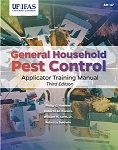
(b) General Household Pest Control

The new exam is just four main topics to study. They are:
(a) Inspection and Identification (45% of the exam)
(b) Monitoring (12% of the exam)
(c) Selection and Implementation of Control Methods (28% of the exam)
(d) Evaluation (15% of the exam)

Q5 - Is there a study guide?
A new study guide is being written now. A publishing date is not yet available.

Q6 - If I'm already an ACE, do I need to take the new exam in order to stay current?
No, but you will be required to watch a free webinar to ensure that all ACEs (existing and new) understand the concepts covered in the content outline. The webinar is being devised now and details will be published as soon as they are available.
The answer to this question changed from how it was originally posted. Current ACEs will not need to watch a webinar. They will, however, be required to review the new content outline and affirm with ESA that they have done so. See this post to learn how to do this if you became an ACE before 12.31.2013.

Q7 - Did the fees go up?
No. The structure of the application did change, however. Starting on January 1 all applications have a 3-year lifespan. The application fee is $395 for non-ESA members (ESA members save $40 -- their fee is $355). Once a person takes and passes the exam, however, they are ACE certified until the end of the initial 3-year term. ESA operates on a calendar year basis so some "rounding" will be involved with some initial terms lasting a little longer than 3 years and some lasting a little less than 3 years. Applications accepted in Jan-June will be a little less than 3 years and applications accepted July-December will be a little longer than 3-years in terms of their ACE certification when they pass.

(a) Example #1 - John's application is accepted on 2/1/2014 and he tests and passes his ACE on 9/1/2014. His application lifespan is from 2/1/2014 and he will remain ACE certified until the end of the 3-year term (12/31/2016) which is a few months short of the 3-year period.

(b) Example #2 - Jane's application is accepted on 8/1/2014 and she tests/passes later that month. Her application lifespan is from 8/1/2014 and she will remain ACE certified until 12/31/2017 (since she applied in the second half of the year). Her application lifespan is thus a little longer than 3 years.

Q8 - I still don't get it. Can you tell me more about this new "lifespan" for my application?
You will have up to 3 years to pass your exam once your application is approved. The VAST majority of all ACE applicants pass their exam in FAR less than this amount of time. This change arose because the SMEs felt that the application process should not be indefinite, but that we also did not want to force the process too fast.

The timeline rules are these:
(a) All applicants must take their exam within 1 year of the application's acceptance
(b) If unsuccessful, the applicant must wait at least 3 months but not more than 1 year from their earlier attempt
(c) All applicants must ultimately pass the ACE exam within 3 years of application acceptance or the application will expire
(c1) If your application is accepted in the first half of the year it will expire on December 31st, two years hence
(c2) If your application is accepted in the second half of the year it will expire on December 31st, three years hence

Friday, October 18, 2013

New ACE exam content outline dissected: I&I - (Part 1 of 4)

Anyone who has been paying attention should know by now that the ACE exam is undergoing some improvements and the content outline is being updated. So far we've discussed (a) how the changes affect applicants, (b) what is a content outline, and (c) how to study for the new exam.

I thought it might be appropriate to dig in a bit on how the content outline is built.

There are 4 Knowledge Domains on the new exam. The first is Inspection and Identification which will make up 45% of the questions on the exam.

Under the I&I Domain there are four skills that a person should be able to perform if they are to become an ACE. Those are:

  • Inspect for evidence of pests
  • Inspect for conditions conducive to pests
  • Identify pests
  • Document and communicate findings of pest inspection and identification
Analyzed further for each skill ...

Inspect for evidence of pests - In order to perform this skill, a person would need this knowledge:
  • Tools available for inspection and appropriate uses  (e.g., flashlight, moisture meter, flushing agents)
  • Probable locations of pests
  • Types of evidence of pest presence (e.g., damage caused, egg types, frass)
  • Safety precautions (e.g., equipment, personnel)
Inspect for conditions conducive to pests - In order to perform this skill, a person would need this knowledge:
  • Tools available for inspection and appropriate uses  (e.g., flashlight, moisture meter, flushing agents)
  • Conditions conducive to pests (e.g., site, weather, ambient conditions)
  • Safety precautions (e.g., equipment, personnel)
Identify pests - In order to perform this skill, a person would need this knowledge:
  • Taxonomy and classification
  • Morphology
  • Biology (basic physiology, behavior, habitat, life cycle, reproduction potential)
  • Damage caused
Document and communicate findings of pest inspection and identification - In order to perform this skill, a person would need this knowledge:
  • How to explain pest thresholds and respond to customer expectations
  • Use, limitations and types of pest thresholds
  • What to document
  • How to document
  • Where to document
  • To whom to communicate findings
  • Adherence to ACE Code of Ethics