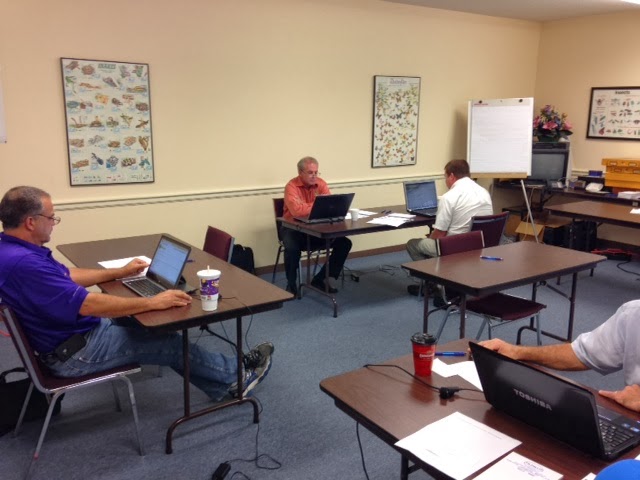
Friday, October 18, 2013

New ACE exam content outline dissected: I&I - (Part 1 of 4)

Anyone who has been paying attention should know by now that the ACE exam is undergoing some improvements and the content outline is being updated. So far we've discussed (a) how the changes affect applicants, (b) what is a content outline, and (c) how to study for the new exam.

I thought it might be appropriate to dig in a bit on how the content outline is built.

There are 4 Knowledge Domains on the new exam. The first is Inspection and Identification which will make up 45% of the questions on the exam.

Under the I&I Domain there are four skills that a person should be able to perform if they are to become an ACE. Those are:

  • Inspect for evidence of pests
  • Inspect for conditions conducive to pests
  • Identify pests
  • Document and communicate findings of pest inspection and identification
Analyzed further for each skill ...

Inspect for evidence of pests - In order to perform this skill, a person would need this knowledge:
  • Tools available for inspection and appropriate uses  (e.g., flashlight, moisture meter, flushing agents)
  • Probable locations of pests
  • Types of evidence of pest presence (e.g., damage caused, egg types, frass)
  • Safety precautions (e.g., equipment, personnel)
Inspect for conditions conducive to pests - In order to perform this skill, a person would need this knowledge:
  • Tools available for inspection and appropriate uses  (e.g., flashlight, moisture meter, flushing agents)
  • Conditions conducive to pests (e.g., site, weather, ambient conditions)
  • Safety precautions (e.g., equipment, personnel)
Identify pests - In order to perform this skill, a person would need this knowledge:
  • Taxonomy and classification
  • Morphology
  • Biology (basic physiology, behavior, habitat, life cycle, reproduction potential)
  • Damage caused
Document and communicate findings of pest inspection and identification - In order to perform this skill, a person would need this knowledge:
  • How to explain pest thresholds and respond to customer expectations
  • Use, limitations and types of pest thresholds
  • What to document
  • How to document
  • Where to document
  • To whom to communicate findings
  • Adherence to ACE Code of Ethics

Thursday, October 17, 2013

Certified Science - October 2013

Certified Science
A Periodic ESA E-mail Service (and blog post) directed at ACEs and Urban-Industrial BCEs
October, 2013

The Entomological Society of America is the #1 source of scientific information for the urban entomologist. This email is a service of the Entomological Society of America for all Associate Certified Entomologists (ACEs) and Board Certified Entomologists (BCEs) who hold a specialty in urban and industrial entomology.

Here is a summary of some recent articles in the ESA journals that relate to structural pest management and urban arthropod pests. The abstracts are freely available online for all articles, though access to the full text will generally require member in the Entomological Society of America, in addition to your certification.


The Influence of Fipronil on Reticulitermes flavipes (Isoptera: Rhinotermitidae) Feeding Beyond Treated Plots
Abstract: A small-plot field trial was conducted to examine the area of influence of fipronil at incremental distances away from treated plots on the Harrison Experimental Forest near Saucier, MS. Small treated (water and fipronil) plots were surrounded by untreated wooden boards in an eight-point radial pattern, and examined for evidence of termite feeding every 60 d for 1 yr after treatment. Circular areas of 0, 0.28, 1.13, 2.55, 4.52, 7.07, and 10.18 m2 around the treated plots were installed to evaluate feeding damage by termites on the boards. (Full abstract here)
Authors: Shelton, Thomas G
Source: Journal of Economic Entomology, Volume 106, Number 5

Detection of the A302S Rdl Mutation in Fipronil Bait-Selected Strains of the German Cockroach (Dictyoptera: Blattellidae)
Abstract: Extensive usage and heavy reliance on insecticides have led to the development of insecticide resistance in the German cockroach, Blattella germanica (L.). Six field-collected strains of B. germanica from Singapore were used to investigate resistance to fipronil and dieldrin. The three strains (Boat Quay, Cavenagh Road, and Ghimmoh Road) with greatest resistance to fipronil were subjected to selection with fipronil bait up to the F5 generation. Synergism assay and molecular detection of a target site mutation were used to elucidate the mechanism of fipronil resistance in these strains. With the exception of the Cavenagh Road strain, all parental strains were susceptible to dieldrin. This strain exhibited resistance to dieldrin and fipronil ... (Full abstract here)
Authors: Ang, Ling-Hui; Nazni, Wasi Ahmad; Kuah, Meng-Kiat; Shu-Chien, Alexander Chong; Lee, Chow-Yang
Source: Journal of Economic Entomology, Volume 106, Number 5

Colony Breeding Structure of the Invasive Termite Reticulitermes urbis (Isoptera: Rhinotermitidae)
Abstract: Invasive species cause severe environmental and economic problems. The invasive success of social insects often appears to be related to their ability to adjust their social organization to new environments. To gain a better understanding of the biology of invasive termites, this study investigated the social organization of the subterranean termite, Reticulitermes urbis, analyzing the breeding structure and the number of reproductives within colonies from three introduced populations. By using eight microsatellite loci to determine the genetic structure, it was found that all the colonies from the three populations were headed by both primary reproductives (kings and queens) and secondary reproductives (neotenics) to form extended-family colonies (Full abstract here)
Authors: Perdereau, Elfie; Velonà Alessandro; Dupont, Simon; Labédan, Marjorie; Luchetti, Andrea; Mantovani, Barbara; Bagnères, Anne-Genevieve
Source: Journal of Economic Entomology, Volume 106, Number 5

Models to Predict Mortality of Tribolium castaneum (Coleoptera: Tenebrionidae) Exposed to Elevated Temperatures During Structural Heat Treatments
Abstract: Novel thermal death models were developed with certain assumptions, and these models were validated by using actual heat treatment data collected under laboratory conditions at constant temperatures over time and in commercial food-processing facilities where temperatures were dynamically changing over time. The predicted mortalities of both young larvae and adults of the red flour beetle, Tribolium castaneum (Herbst), were within 92‐99% of actual measured insect mortalities. (Full abstract here)
Authors: Jian, Fuji; Subramanyam, Bhadriraju; Jayas, Digvir S.; White, Noel D. G.
Source: Journal of Economic Entomology, Volume 106, Number 5

Molting Process in the Formosan Subterranean Termite (Isoptera: Rhinotermitidae)
Abstract: This study describes the behavioral and histological changes that take place during ecdysis in the Formosan subterranean termite. The molting process was described in four distinct phases, starting with the peristaltic contraction of the abdomen to the complete shedding of the exuvium. Although individual termites still managed to go through the molting process when isolated from their nestmates, it required more time for the molting individual to complete the process than when aided by its nestmates. Histological observations were made on termites during the intermolt period, the premolting or fasting period, the pre-ecdysis and the ecdysis periods, and on newly molted individuals. Symbiotic protozoans were voided at the beginning of the premolting/fasting period. (Full abstract here)
Authors: Xing, Lin; Chouvenc, Thomas; Su, Nan-Yao
Source:  Annals of the Entomological Society of America, Volume 106, Number 5

American Entomologist
ACEs have full access to the online edition of this publication by logging into the ESA website. Some of the pest-management-related articles in the latest edition are:
  • A Summer Without Monarchs - Gene Kritsky's short review of where all the monarch butterflies are this year
  • This Study Sucks! - Gerry Wegner, BCE examines bed bug control using vacuum technology
  • Arachnophobic Entomologists: When Two More Legs Makes a Big Difference - Rick Vetter and a great article on entomologists who just don't like spiders

Wednesday, October 16, 2013

A very good month for pest control certification

There were several big ACE Prep Courses last month with over 50 PMPs testing for their ACE. As a result of these classes and those who tested without a prep course, more than 30 new people are now ACE-certified.

I'm often asked if you need to go to a prep course to take your ACE. The short answer is "no", but many people find that it is a good way to hone their knowledge and get them into a "test-taking mindset".

It worked well for Clark who now has 14 new ACEs on the books. ACE certification is a personal designation, but we like to list the company that the PMP is affiliated with as well.

Here are the names of all who passed their ACE in the past month. Our congratulations to all (and their employers for having such talented PMPs on staff)!

The Bug Man, Inc. in Little Rock, AR. Both were certified on 10/2/2013
Mr. Dwight Howard, ACE
Mr. Gerard Laborde, ACE

J&J Exterminating Co, Inc. in DeRidder, LA.  Both were certified on 10/2/2013
Mr. Adam D. Woodard, ACE
Mr. Bryan D. Gaspard, ACE

Clark Pest Control in Lodi, CA.  All were certified on 10/2/2013
Mr. Ethan Bechtel, ACE
ESA mailed out over 30 new ACE packets this month!
Mr. Ryan Cowler, ACE
Mr. Gerry Delabra, ACE
Mr. Chuck Ehmann, ACE
Mr. Bill Haga, ACE
Mr. Jerry Hauser, ACE
Mr. Bill Houdashell, ACE
Mr. Eric Howell, ACE
Mr. Gary Koeppen, ACE
Mr. Matthew Kolb, ACE
Mr. Douglas Lipsie, ACE
Mr. Fred McCarn, ACE
Mr. Rob Roy McGregor, ACE
Mr. Michael Parker, ACE

Lady-Bug Services, Inc. of Amarillo, TX. All were certified on 9/24/2013
Mr. Brent Guy Berg, ACE
Mr. Brad Turner, ACE
Mr. Bradley Logan Weiss

All were certified on 10/2/2013
Mr. Jeffery G Hargrave, ACE, (Orkin LLC), Scott, LA
Mr. Richard Rainey, ACE, (SPLAT Pest Control of Baton Rouge, LLC), Baton Rouge, LA
Mr. Jarrod Wayne Horton, ACE, (Anti-Pest Company, Inc.), Shreveport, LA
Mr. Kevin Viator, ACE, (Kevin's Pest Control Inc.), New Iberia, LA

All were certified on 9/24/2013
Mr. Chris Landry, ACE, (Orkin Pest Control), Odessa, TX
Mr. Victor L. Markle, ACE, (Markle Pest Management & Tree Service), Mesquite, TX
Mr. Ron Dawson, Jr., ACE, (Dallas Ft. Worth Pest Control), Dallas, TX
Mr. Warren T Remmey, Jr, ACE, (Spider Man Pest Control, Inc), San Antonio, TX
Mr. Jared Chrestman, ACE, (J.C.'s Terminix), Lubbock, TX

Was certified on 9/20/2013
Mr. Robert M Ward, ACE, (Rose Pest Solutions), Lansing, MI

Tuesday, October 15, 2013

How to study for the new ACE exam

Does this sound like you:  You're thinking about applying to become an ACE and then you heard that the content is changing. Arrrgh!  What do I study now?

First ... relax. We think that you'll find the new exam content is not substantially different from the current exam content. What changed is a move to a more logical structure and one that has been validated by interviews with and survey responses from hundreds of pest management professionals across the United States.  Essentially, there are just four main areas now. They are (in no particular order):

  • Inspection and Identification (45% of the exam)
  • Monitoring (12% of the exam)
  • Selection and Implementation of Control Methods (28% of the exam)
  • Evaluation (15% of the exam)

Within each of these "domains" there are skills that a person should be able to competently perform if they are to become ACE certified. This is what you are going to test on. For example, under the Domain "Inspection and Identification", the skills needed are:
  • Inspect for evidence of pests
  • Inspect for conditions conducive to pests
  • Identify pests
  • Document and communicate findings of pest inspection and identification

Remember, the full content outline of what you need to study to pass the new ACE exam is on the ESA website. 


What pests are on the exam?
The structure for the new exam is that you'll find the pests covered are discussed within the Domains outlined above. In other words, you might find a question about bed bugs in a Monitoring question or an Evaluation question. But you would not find a question about bed bugs that does not relate to one of the 4 Domains. The pests covered are (in no particular order):


On the new content outline (found by following the hyperlinks above) you'll find these topics broken down further. The list of actual creatures covered is on the content outline in order of decreasing likelihood of occurrence on the exam. If an insect or arthropod is not listed it should not appear on the exam as the main subject of a question.

Regarding non-arthropod pests, you'll only find them on the exam to the extent that they intersect with entomology. In other words, though a competent PMP should know a lot about the biology of rats, the focus of the ACE program is going to be more on the fact that a rat can harbor a variety of pests and introduce them into the house.


Study Resources:
But you want a book, don't you?  Many of the current books that people have been using to study for the ACE will still be relevant. Of these, the Handbook of Household and Structural Insect Pests is perhaps one of the better tools. As of this writing, the full list of currently recommended study materials is this:
ESA is currently working on a single resource which will become the official study guide for the new ACE exam. No release date is yet known*. In the meantime, read the content outline, study the resources you have, and maybe attend an ACE Prep Course.

* This section of the post has been updated. The study guide which was originally expected to be ready by 2014 has been delayed.

Wednesday, September 18, 2013

Certification Board actions

The ESA Certification Board is a hard-working group of volunteers who give considerably of their time to support the programs offered by ESA. The board meets quarterly with three of the meetings being teleconferences and one in person (held in conjunction with the ESA Annual Meeting). Board meetings are generally closed, though visitors are occasionally invited by the Certification Board Director or the staff Director of Certification.

The most recent board meeting was held on the phone on September 10th. Actions of note taken by the board recently include:

  • The fees for retesting on a BCE exam will be set to match the ACE retesting fees.
  • The bylaws for service on the Certification Board are going to be revised in an attempt to simplify the structure of the Board. 
  • The Board authorized additional four CEUs to be offered to those BCEs who attend the annual BCE symposia. 
  • Other recent Board actions were covered in an earlier post.
The next meeting of the Certification Board is set for November 10th, 2013 in Austin, TX from 2-5pm. ACEs and BCEs who have business before the board are encouraged to submit requests for adding to the agenda prior to the 25th of October.

Monday, September 16, 2013

Newest ACEs and BCEs

Our congratulations to those professionals who earned their ACE or BCE in the past month ...

Ms. Dena Lynette Berg-Castaño, ACE, (Northwest Exterminating), Tucson, AZ  USA.  Certified on 8/21/2013.
Mr. Timothy P. Best, ACE, (Arrow Environmental Services), Port Monmouth, NJ  USA.  Certified on 8/24/2013.
Mr. Paul E Brissette, ACE, (Batzner Pest Management, Inc.), New Berlin, WI  USA.  Certified on 8/12/2013.
Mr. Kent Smith, ACE, (Rentokil / Presto-X), Oskaloosa, IA  USA.  Certified on 8/21/2013.
Mr. Jerry D. Kerce, ACE, (Florida Army National Guard), Starke, FL  USA.  Certified on 8/23/2013.
Mr. Jeffrey A. Scharp, ACE, (Holders Pest Solutions), Houston, TX  USA.  Certified on 9/5/2013.
Mr. James Rodriguez, ACE, (J.T. Eaton Co., Inc.), Valencia, CA  USA.  Certified on 8/29/2013.
Mr. Daniel Rao, ACE, (Arrest A Pest, Inc.), Braintree, MA  USA.  Certified on 9/10/2013.
Mr. Christopher William Evans, ACE, (Schendel Pest Services), Joplin, MO  USA.  Certified on 8/19/2013.
Mr. Charles E. Ford, ACE, (Holders Pest Solutions), Houston, TX  USA.  Certified on 9/5/2013.
Mr. Anthony J Rithman, ACE, (Stout Pest Control), San Antonio, TX  USA.  Certified on 8/21/2013.
Mr. Andrew Seth Taylor, BCE, (Clegg's Termite and Pest Control LLC), Durham, NC  USA.  Certified on 9/3/2013.

Tuesday, September 3, 2013

Certified Science - Sept 2013

Certified Science

September, 2013

The Entomological Society of America is the #1 source of scientific information for the urban entomologist. This email is a service of the Entomological Society of America for all Associate Certified Entomologists (ACEs) and Board Certified Entomologists (BCEs) who hold a specialty in urban and industrial entomology.

Here is a summary of some recent articles in the ESA journals that relate to structural pest management and urban arthropod pests. The abstracts are freely available online for all articles, though access to the full text will generally require member in the Entomological Society of America, in addition to your certification.

Delayed Toxicity of Two Chitinolytic Enzyme Inhibitors (Psammaplin A and Pentoxifylline) Against Eastern Subterranean Termites (Isoptera: Rhinotermitidae)
Abstract: By using a no-choice feeding bioassay, delayed toxicity and concentration-dependent mortality of two chitinolytic enzyme inhibitors, pentoxifylline and psammaplin A, were evaluated by determining LT50, LT90, and LT99 (lethal time) against the economically important eastern subterranean termite, Reticulitermes flavipes (Kollar). Pentoxifylline- and psammaplin A-incorporated diets (filter paper) were assayed at 0.01, 0.02, 0.04, 0.08, and 0.21% and 0.0375, 0.075, 0.15, and 0.3% active ingredient (wt:wt), respectively. Acetone-only treated filter paper served as diet for the control treatments. Termite workers were allowed to feed on diet until 100% test population mortality occurred (80-95 d). Both chitinase inhibitors were shown to be toxic to R. flavipes...(Full abstract here)
Authors: Husen, Timothy J.; Kamble, Shripat T.
Source: Journal of Economic Entomology, Volume 106, Number 4

Feeding Response of Subterranean Termites Coptotermes curvignathus and Coptotermes gestroi (Blattodea: Rhinotermitidae) to Baits Supplemented With Sugars, Amino Acids, and Cassava
Abstract: Feeding responses of subterranean termites Coptotermes curvignathus (Holmgren) and Coptotermes gestroi (Wasmann) (Blattodea: Rhinotermitidae) to bait matrices supplemented with various sugars, amino acids, and cassava were evaluated both in the laboratory and field. The results indicated that the two termite species consumed significantly different amount of filter papers that had been treated with various types and concentrations of sugars and amino acids. Based on consumption and survival data, filter papers with 3% glucose and 3% xylose were among the most consumed by C. curvignathus and C. gestroi, respectively. Both termite species consumed more of the filter papers treated with 3% casein than filter papers treated with l-alanine... (Full abstract here)
Authors: Castillo, Venite Pesigan; Sajap, Ahmad Said; Sahri, Mohd Hamami
Source: Journal of Economic Entomology, Volume 106, Number 4

Effect of Trap Design, Chemical Lure, Carbon Dioxide Release Rate, and Source of Carbon Dioxide on Efficacy of Bed Bug Monitors
Abstract: Bed bugs, (Cimex lectularius L.), are difficult to find because of their nocturnal and secretive behavior. In recent years, a number of monitors containing carbon dioxide (CO2), chemical lures, heat, or both, to attract bed bugs have been developed for detecting bed bugs. Ineffective trap design, lack of attraction of chemical lures, high cost of the CO2 delivery system, or insufficient CO2 release rates are some factors that limited the wide adoption of these monitors. To develop an affordable and effective monitor, we conducted a series of laboratory and field tests. Specifically, we tested a new pitfall trap design, a chemical lure mixture, different CO2 release rates, and a sugar and yeast mixture as CO2 source. Results show the new pitfall trap design was significantly more effective than Climbup insect interceptor, the most effective passive monitor available in the market for bed bugs. (Full abstract here)
Authors: Singh, Narinderpal; Wang, Changlu; Cooper, Richard
Source: Journal of Economic Entomology, Volume 106, Number 4

Lufenuron Suppresses the Resistance of Formosan Subterranean Termites (Isoptera: Rhinotermitidae) to Entomopathogenic Bacteria
Abstract: Pesticides can negatively affect insect immunity. Although studies show that Formosan subterranean termites, Coptotermes formosanus Shiraki, are resistant to microbial infections, the effects of pesticides on disease resistance is not well studied. In this study, C. formosanus previously fed lufenuron was exposed to each of the three entomopathogenic bacteria, Pseudomonas aeruginosa (Schroeter) Migula, Serratia marcescens Bizio, and Bacillus thuringiensis Berliner subsp. israelensis. We found that termite mortality was significantly higher and synergistic in the combination of lufenuron and P. aeruginosa compared with treatment of lufenuron or P. aeruginosa alone... (Full abstract here)
Authors: Wang, Cai; Henderson, Gregg; Gautam, Bal K.
Source: Journal of Economic Entomology, Volume 106, Number 4

Evidence of Formosan Subterranean Termite Group Size and Associated Bacteria in the Suppression of Entomopathogenic Bacteria, Bacillus thuringiensis subspecies israelensis and thuringiensis
Abstract: The Formosan subterranean termite, Coptotermes formosanus Shiraki, was studied for its ability to suppress two entomopathogenic bacteria, Bacillus thuringiensis subspecies israelensis (Bti) and thuringiensis (Btt). Different group sizes (50, 25, 10, and no termites [control]) of C. formosanus were placed on well-grown Bti or Btt agar plates. On day 1, the diameters of Bti and Btt colonies in the three treatments containing termites were significantly smaller than in the controls. The diameters of Bti and Btt colonies in the 50-termite treatment were significantly smaller than in the 10-termite treatment. However, neither was significantly different from the 25-termite treatment.... (Full abstract here)
Authors: Wang, Cai; Henderson, Gregg
Source: Annals of the ESA, Volume 106, Number 4

The Deployed Warfighter Protection (DWFP) Research Program: Developing New Public Health Pesticides, Application Technologies, and Repellent Systems
Abstract: The Research Program for Deployed Warfighter Protection (DWFP) against disease-carrying insects is an initiative by the United States Department of Defense to develop, validate and use novel materials and technologies to protect deployed military personnel from vector-borne diseases, especially those transmitted by mosquitoes and sand flies. Launched in 2004 and administered by the U.S. Armed Forces Pest Management Board, the program is funded at US$5 million annually. The DWFP research portfolio is concentrated in three areas: novel insecticide chemistries/formulations, application technologies, and personal protective measures. (Full abstract here)
Authors: Burkett, Douglas A.; Cope, Stanton E.; Strickman, Daniel A.; White, Graham B.
Source: Journal of Integrated Pest Management, Volume 4, Number 2

Environmental Forcing Shapes Regional House Mosquito Synchrony in a Warming Temperate Island
Abstract: Seasonal changes in the abundance of exothermic organisms can be expected with climate change if warmer temperatures can induce changes in their phenology. Given the increased time for ectothermic organism development at lower temperatures, we asked whether population dynamics of the house mosquito, Culex pipiens s.l. (L.) (Diptera: Culicidae), in Jeju-do (South Korea), an island with a gradient of warming temperatures from north to south, showed differences in sensitivity to changes in temperature along the warming gradient. In addition, we asked whether synchrony, that is, the degree of concerted fluctuations in mosquito abundance across locations, was affected by the temperature gradient. We found the association of mosquito abundance with temperature to be delayed by 2 wk in the north when compared with the south. (Full abstract here)
Authors: Chaves, Luis Fernando; Higa, Yukiko; Lee, Su Hyun; Jeong, Ji Yeon; Heo, Sang Taek; Kim, Miok; Minakawa, Noboru; Lee, Keun Hwa
Source: Environmental Entomology, Volume 42, Number 4

Review of the Biology, Ecology, and Management of Halyomorpha halys (Hemiptera: Pentatomidae) in China, Japan, and the Republic of Korea
Abstract: Native to China, Japan, Korea, and Taiwan, the brown marmorated stink bug, Halyomorpha halys (Stål) (Hemiptera: Pentatomidae) was first detected in the United States in the mid-1990s. Since establishing in the United States, this invasive species has caused significant economic losses in agriculture and created major nuisance problems for home and business owners, especially in the mid-Atlantic region. Basic and applied questions on H. halys have been addressed in its native range in Asia since the mid-1900s and the research outcomes have been published in at least 216 articles from China, Japan, and the Republic of Korea. In Asia, H. halys is described as an occasional or outbreak pest of a number of crops such as apple, pear, persimmon, and soybeans. This species is considered a nuisance pest as well...(Full abstract here)
Authors: Lee, Doo-Hyung; Short, Brent D.; Joseph, Shimat V.; Bergh, J. Christopher; Leskey, Tracy C.
Source: Environmental Entomology, Volume 42, Number 4

Overwintering Biology of Culex (Diptera: Culicidae) Mosquitoes in the Sacramento Valley of California
Abstract: At temperate latitudes, Culex (Diptera: Culicidae) mosquitoes typically overwinter as adult females in reproductive arrest and also may serve as reservoir hosts for arboviruses when cold temperatures arrest viral replication. To evaluate their role in the persistence of West Nile virus (WNV) in the Sacramento Valley of California, the induction and termination of diapause were investigated for members of the Culex pipiens (L.) complex, Culex tarsalis Coquillett, and Culex stigmatosoma Dyar under field, seminatural, and experimental conditions. All Culex spp. remained vagile throughout winter, enabling the collection of 3,174 females and 1,706 males from diverse habitats during the winters of 2010-2012. Overwintering strategies included both quiescence and diapause. In addition, Cx. pipiens form molestus Forskäl females remained reproductively active in both underground and above ground habitats... (Full abstract here)
Authors: Nelms, Brittany M.; Macedo, Paula A.; Kothera, Linda; Savage, Harry M.; Reisen, William K.
Source: Journal of Medical Entomology, Volume 50, Number 4

If there are articles that you would like to see included in future editions of Certified Science, please email admin@entocert.org. Thank you for keeping your certification current.